Part of our guide: Desi Ghee Benefits: An Honest Guide to Pure Ghee
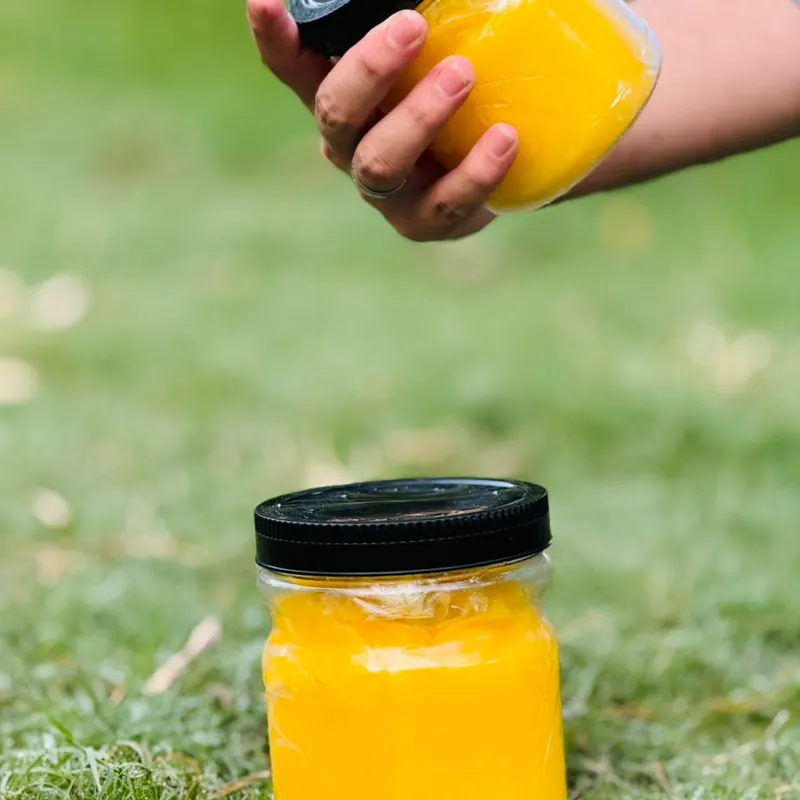
People who count what they eat usually ask us two things: how many desi ghee calories are in a spoon, and what else is in it apart from fat. Fair questions. Ghee is about as simple as a food gets, since it’s made from one ingredient, butter, with the water cooked out. But the numbers are easy to get wrong, mostly because “a spoon” means very different things in different kitchens. Below we’ve put together the general published values for ghee, explained what they mean, and added a few notes from our own cooking.
A quick word first: the figures here are widely published approximate values for ghee in general. They aren’t lab results for our own jars, and every batch of any ghee varies a little.
Desi ghee calories at a glance
Ghee is almost entirely fat, and fat gives about 9 kcal per gram. That one number explains nearly everything else.
| Amount | Approximate weight | Approximate calories |
|---|---|---|
| 1 teaspoon | about 4 to 5 g | about 40 to 45 kcal |
| 1 tablespoon | about 13 to 15 g | about 112 to 135 kcal |
| 100 g | 100 g | about 880 to 900 kcal |
Desi ghee calories in 1 tbsp
You’ll find different figures online for one tablespoon, anywhere from around 112 to 135 kcal. None of them is wrong. A level measuring tablespoon of soft ghee holds less than a heaped tablespoon of the same ghee when it’s solid in December. A household serving spoon is often bigger than a measuring tablespoon too.
If you really want to know what you’re eating, weigh it once. Put a bowl on a kitchen scale, add the spoon of ghee you normally use, and multiply the grams by 9. After that you’ll know roughly what your spoon holds, and you won’t need to weigh it every time.
From our side, the most common surprise is the tarka. Two big spoons poured over daal can easily be 250 kcal or more, which is more than many people expect from a “little” ghee.
Desi ghee nutrition facts per 100g
Here are general reference values for 100g of ghee. Again, treat them as approximate.
- Energy: about 880 to 900 kcal
- Total fat: close to 100 g
- Saturated fat: roughly 60 to 65 g
- Monounsaturated fat: roughly 25 to 30 g
- Polyunsaturated fat: a few grams
- Protein: almost none
- Carbohydrate and sugar: almost none
- Cholesterol: present, since it’s an animal fat
So ghee doesn’t contain protein, fibre or carbs worth mentioning. It’s a cooking fat, and it should be counted as one.
Is ghee saturated or unsaturated?
Mostly saturated. Roughly two thirds of the fat in ghee is saturated, and most of the rest is monounsaturated, with a small share of polyunsaturated fat. That’s why ghee sets solid in a cold kitchen, the same way butter does, while oils like sunflower or canola stay liquid.
Saturated fat is the part doctors usually ask people to watch, especially anyone with high cholesterol or heart disease. That doesn’t make ghee off limits for everyone, but it does mean portions matter. If this is a concern for you, read our post on desi ghee and cholesterol and speak to your doctor about how much fat suits you.
Ghee also naturally contains small amounts of conjugated linoleic acid (CLA) and butyric acid, both found in dairy fat. You’ll see big claims made about these online. We’d keep it simple: they’re there in small amounts, and ghee shouldn’t be eaten for them.
Desi ghee vitamins
Because ghee comes from butter, it carries some of the fat-soluble vitamins found in milk fat, mainly vitamin A, with smaller amounts of vitamins E and K. The amounts vary with the season and what the animals were eating, so we won’t put numbers on them for our ghee.
In general nutrition terms, eating some fat with a meal helps the body absorb fat-soluble vitamins from other foods, such as the carotenes in carrots and spinach. That’s one practical reason a bit of ghee in mustard-green saag or carrot halwa isn’t just about flavour. But a small spoon of ghee isn’t a vitamin supplement, and you’d get far more from vegetables, eggs and dairy.
Desi ghee smoke point
The smoke point is the temperature at which a fat starts to smoke and break down. Ghee’s is usually given as somewhere around 230 to 250°C. Butter’s is much lower, often quoted around 150 to 175°C, because the milk solids in butter burn first. Taking out those solids is exactly what makes ghee so useful for high-heat cooking. We’ve explained the full difference in ghee vs butter.
In practice, this means ghee is comfortable for tarka, shallow frying, roasting flour for halwa and cooking parathas. Smoke point does vary with how well the ghee was made. Ghee that still has moisture or bits of milk solids in it will smoke sooner and can taste burnt. Properly clarified ghee, strained clean, behaves much better in a hot pan.
How much ghee is reasonable?
We’re a ghee kitchen, not a clinic, so we won’t set a number for you. Your needs depend on your age, activity, weight and health. What we can say is that many families use ghee in small, regular amounts: a teaspoon on a roti, a spoon in the daal, a little in a weekend halwa. Problems tend to come from the extra spoonfuls nobody counts.
A few habits that help:
- Use a measuring spoon for a week to see what you’re actually using.
- Use ghee in place of oil for a dish, not as well as oil.
- Keep the rich sweets for occasions.
If you’re watching your weight, our post on desi ghee for weight loss or gain goes into it further.
Does homemade ghee have different nutrition?
Real ghee made from butter will have broadly the same fat and calorie content wherever it’s made. Where homemade ghee differs is in what isn’t in it. Ghee sold cheaply in the market is sometimes mixed with vegetable fat or vanaspati, which changes both the fat profile and the taste.
Our Desi Ghee is made only from homemade butter, slow-cooked in small pots and strained by hand. Jars come in 500g, 1kg, 2kg and 3kg, and delivery across the twin cities takes 3 to 5 days. See desi ghee in Rawalpindi for delivery areas, or book a visit on WhatsApp (0300-0111718) to taste it at our place in New Khatariyal.
Frequently asked questions
How many calories are in 1 teaspoon of desi ghee?
Roughly 40 to 45 kcal, depending on how full the spoon is.
Is ghee higher in calories than butter?
Slightly, gram for gram, because butter still contains water and ghee doesn’t. The difference per spoon is small.
Does desi ghee contain protein?
Almost none. The milk proteins are mostly removed with the milk solids when the ghee is strained.
Is ghee good for high-heat cooking?
Yes. Its smoke point is much higher than butter’s, which is why it’s traditionally used for tarka, frying and parathas.
Does heating ghee change its calories?
No. Melting or cooking with ghee doesn’t change its calories. What changes calories is how much of it ends up on your plate.
اردو خلاصہ
دیسی گھی تقریباً مکمل چکنائی ہے، اس لیے ایک چائے کے چمچ میں تقریباً 40 سے 45 اور ایک بڑے چمچ میں تقریباً 112 سے 135 کیلوریز ہوتی ہیں۔ اس کی زیادہ تر چکنائی سیچوریٹڈ ہے اور یہ تیز آنچ پر جلدی نہیں جلتا۔ یہ عام اندازے ہیں، اس لیے گھی کو ناپ کر اور اعتدال سے استعمال کریں۔