Part of our guide: Desi Ghee vs Cooking Oil: Which One Belongs in Your Kitchen?
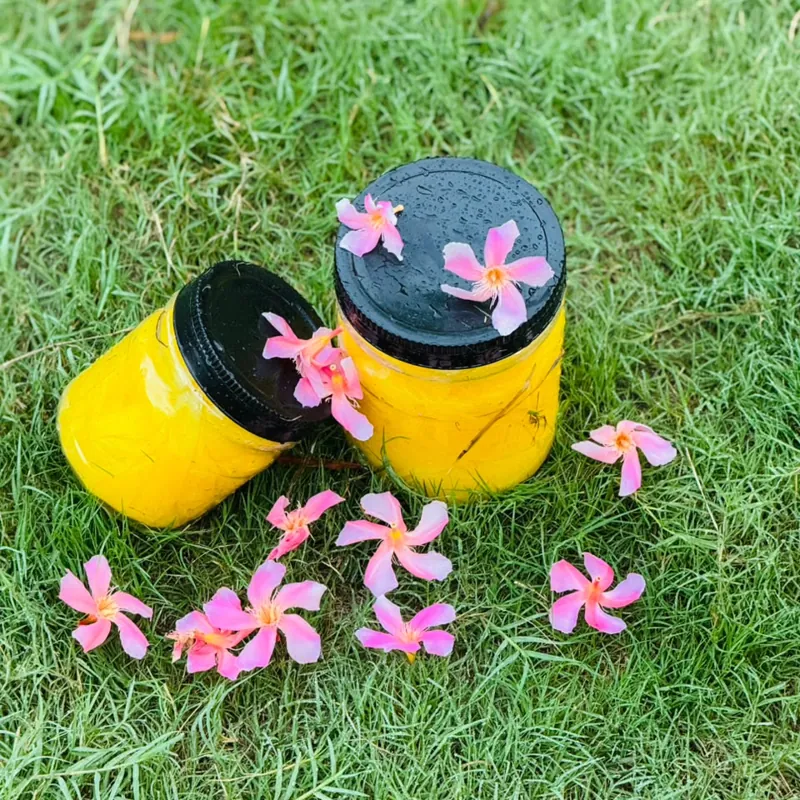
Customers ask us this one more than almost anything else: is ghee just butter? Not quite, though one comes from the other. Every jar of our ghee starts life as butter. What happens in the pot over the next couple of hours is what turns it into something different. In this post we look at ghee vs butter the way we see it from our own kitchen: how each one is made, how they taste, how they behave in a hot pan, how long they keep, and when you might pick one over the other.
Desi ghee meaning in English
If you’ve seen “desi ghee” on a label and wondered what it means in English, the closest term is clarified butter, made the traditional South Asian way. “Desi” means local or homemade, the way it has been done in villages here for generations. “Ghee” is the fat that’s left once butter has been heated slowly until the water cooks off and the milk solids separate out.
Western recipes often call it clarified butter, and that’s close but not identical. Clarified butter in a European kitchen is usually heated just long enough to separate the fat, then strained. Desi ghee is cooked a little longer, until the milk solids at the bottom of the pot turn a light brown. That’s where the nutty smell comes from, the one that fills the whole house when someone is making ghee.
Is ghee and butter the same?
They start as the same thing. They don’t end that way.
Butter is roughly 80% fat. The rest is mostly water, plus a small amount of milk solids, which are the proteins and a bit of milk sugar. Ghee is what you get when nearly all of that water and those solids are taken out. What’s left is almost pure butterfat.
So yes, ghee is made from butter. But it looks different, smells different, cooks differently and keeps far longer.
Ghee and butter difference, side by side
| Butter | Desi ghee | |
|---|---|---|
| What it is | Churned cream | Butter cooked slowly until the water is gone and the solids are strained out |
| Fat | About 80% | Close to 100% |
| Water | Around 15 to 18% | Very little |
| Milk solids | Present | Mostly removed |
| Taste | Creamy, mild, slightly sweet | Nutty, rich, a little toasty |
| In a hot pan | Browns and burns fairly quickly | Handles high heat well |
| Storage | Fridge | Cool, dry cupboard |
These are general figures. The exact numbers change a little from batch to batch and from one brand of butter to another.
How we turn butter into ghee
The process isn’t complicated, but it can’t be rushed. Homemade butter goes into a heavy pot over a low flame. First it melts and foams. Then it bubbles steadily as the water cooks off, and you can hear it crackle. After a while the noise drops, the foam thins, and the milk solids sink and turn the colour of light toast.
That’s the moment to take it off the heat. Too early and there’s still moisture in it, which shortens its shelf life. Too late and the solids burn and the ghee tastes bitter. We cook in small pots so one person can keep an eye on each batch. Then the ghee is strained through fine cloth and left to settle before it goes into jars.
If you want to try it at home, we’ve written out the steps in how to make desi ghee at home. Fair warning: the first batch usually teaches you more about timing than any recipe can.
Cooking: where the difference really shows
High heat, frying and tarka
Butter burns early. The milk solids in it go brown, then black, at a fairly low temperature, which is why butter in a hot pan starts to smoke and smell sharp. Ghee has almost none of those solids left, so it copes with much more heat. For a tarka on daal, frying onions, shallow-frying parathas or roasting flour for halwa, ghee is simply easier to work with.
Baking and spreading
Here butter usually wins. The water in it turns to steam in the oven, which helps cakes rise and gives pastry its flaky layers. You can bake with ghee, and plenty of our traditional sweets are made with nothing else, but a cake recipe written for butter won’t come out quite the same if you swap one for the other. And cold butter on toast is hard to beat. Ghee on a hot roti is a different kind of pleasure.
Flavour
Butter tastes creamy and mild. Well-made desi ghee tastes deeper and nuttier, almost like caramel at the edges. A small amount goes a long way, which is why one spoon on a plate of daal changes the whole dish.
Storage and shelf life
Butter needs the fridge. Leave it out during a Rawalpindi summer and it’ll go soft, then sour, within a day or two.
Ghee has so little water in it that it keeps for months in a cool, dry cupboard, provided you use a dry spoon. In winter it sets solid and can look grainy. In summer it goes soft or turns to liquid. Both are normal and don’t mean anything is wrong with it.
The one thing that spoils ghee is moisture. A wet spoon, an open jar next to a steaming pot, drops of water under the lid. Keep it dry and it lasts.
Is ghee healthier than butter?
Gram for gram, ghee has a little more fat and more calories than butter, simply because the water has been taken out. A tablespoon of ghee comes to roughly 112 to 135 kcal depending on the size of the spoon, while the same spoon of butter is somewhat less. Both are mostly saturated fat. Neither is something to eat by the spoonful, and neither needs to be feared in sensible amounts.
One practical difference: since ghee has very little milk protein or milk sugar left in it, some people who feel uncomfortable after milk or butter find ghee sits better with them. That isn’t true for everyone, and anyone with a diagnosed milk allergy should talk to their doctor before trying it.
For the numbers in more detail, see our post on desi ghee calories and nutrition. If cholesterol is your main worry, read desi ghee and cholesterol.
Ghee vs butter: which should you use?
- Tarka, frying, parathas, halwa, anything on high heat: ghee.
- Cakes, biscuits and pastry written for butter: butter.
- Spreading cold on bread: butter.
- A spoon on hot rice, daal or khichdi: ghee.
In the ghee vs butter question, most homes in Pakistan simply keep both. They do different jobs.
Buying ghee that’s really made from butter
Here’s the catch. Some of what’s sold as “desi ghee” in the market isn’t made from butter at all. It may be mixed with vegetable fat, or be mostly vanaspati with added flavour. If the whole point of ghee is that it comes from butter, it’s worth asking how it was made.
Our own Desi Ghee is made only from homemade butter, slow-cooked in small pots, and comes in 500g, 1kg, 2kg and 3kg jars. If you live nearby, you’re welcome to book a visit on WhatsApp (0300-0111718) and come to New Khatariyal, near Shell Pump Road in Rawalpindi, to see, smell and taste it before you order. For delivery areas, see desi ghee in Rawalpindi.
Frequently asked questions
Can I use ghee instead of butter in baking?
Often, yes, especially in biscuits, nankhatai and dense cakes. Use a little less ghee than the butter in the recipe, since ghee has no water in it. Light, fluffy cakes and flaky pastry usually turn out better with butter.
Does ghee taste like butter?
It’s related, but stronger and nuttier. Butter tastes fresh and creamy. Ghee tastes cooked, in a good way, because of the browned milk solids it was made with.
Why does ghee last longer than butter?
Because the water has been cooked out. Moisture is what lets butter go sour quickly. Without it, ghee keeps for months if you store it in a dry jar away from heat.
How much butter does it take to make ghee?
Roughly a quarter more butter than the ghee you end up with, since about a fifth of butter is water and milk solids. The exact amount depends on the butter.
Can people who avoid milk eat ghee?
Some people who feel uncomfortable after milk do fine with ghee, because most of the milk protein and milk sugar is removed. If you have a milk allergy, ask your doctor first.
اردو خلاصہ
دیسی گھی مکھن ہی سے بنتا ہے، لیکن آہستہ آنچ پر پکانے سے اس کا پانی اور دودھ کے ٹھوس ذرات نکل جاتے ہیں۔ اسی لیے گھی تیز آنچ پر نہیں جلتا اور فریج کے بغیر مہینوں چلتا ہے، جبکہ مکھن بیکنگ اور ڈبل روٹی پر لگانے کے لیے بہتر ہے۔ دونوں کو اعتدال سے استعمال کریں۔