Part of our guide: How to Check Pure Desi Ghee: 7 Simple Home Tests
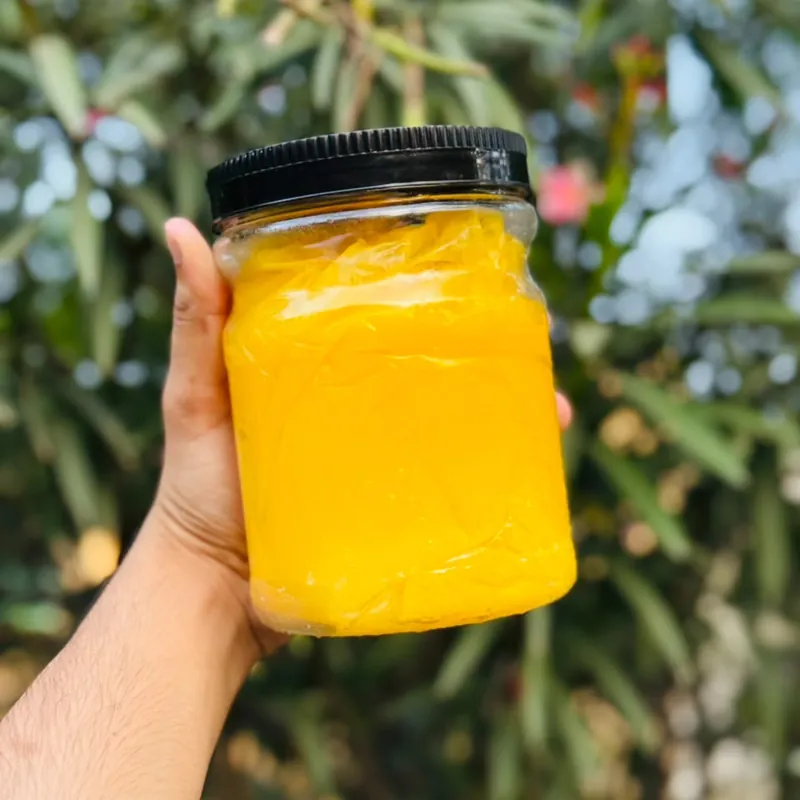
One of the first things customers ask us after their order arrives is how long it will last. Fair question, especially if you’ve bought a 2kg or 3kg pack. The good news is that desi ghee shelf life is long compared with most dairy, because almost all the water has been cooked out. The less good news is that a few careless habits can spoil a jar in weeks. Here is what we’ve learned from years of making and storing ghee in our own kitchen.
Desi Ghee Shelf Life: How Long Does It Last?
Well-made ghee, stored properly, stays good for several months. We don’t put an exact number on it, because how long your jar lasts depends far more on your kitchen than on ours. A jar opened twice a day with a damp spoon next to a hot stove will not keep the way a jar sitting in a cool cupboard does.
Three things shorten the life of ghee more than anything else:
- Moisture. Water is the main enemy. Even a few drops can start mould or a sour smell.
- Heat and sunlight. These speed up rancidity, the stale, paint-like smell old fat gets.
- Air and dirt. A loose lid lets in air, and crumbs or flour from a used spoon give spoilage something to grow on.
Does Desi Ghee Have an Expiry Date?
Packaged ghee from factories carries a printed best-before date. Homemade and small-batch ghee often doesn’t, or carries a rough guide only. That doesn’t mean the desi ghee shelf life is endless. It means you should judge it by smell, taste and look, which we explain further down.
A practical habit: write the date you opened the jar on a piece of masking tape on the lid. It takes five seconds and saves a lot of guessing later.
Homemade Ghee Shelf Life
If you make ghee at home from collected cream or butter, how well you cook it decides how long it keeps. Ghee that is taken off the flame too early still holds some moisture, and that moisture is what makes it go sour sooner. Properly cooked ghee is clear, the solids at the bottom have turned golden brown, and the bubbling has calmed right down. We describe the full process in how desi ghee is made at home.
Strain it well too. Leftover milk solids left floating in the jar spoil faster than the fat around them.
The Best Ghee Storage Container
We recommend a clean, completely dry glass jar with a tight lid. Glass doesn’t hold old smells and you can see what is happening inside. Steel containers with good lids also work well. Avoid thin plastic tubs for long storage, and never use a container that held pickle or anything with a strong smell, because ghee picks up odours easily.
If you buy in bulk, don’t keep the whole quantity in one big jar that you open every day. Fill a small jar for daily use and keep the rest sealed. The big jar then stays untouched and fresh until you need to top up.
Simple Storage Rules That Make the Biggest Difference
- Always use a clean, dry spoon. This one rule prevents most spoiled jars we hear about.
- Close the lid properly straight after use.
- Keep the jar in a cupboard, away from sunlight and away from the stove, oven or heater.
- Don’t put ghee back in the jar once it has been in a hot pan or touched food.
- Keep the outside of the jar clean so ants and dust aren’t drawn to it.
Do you need to refrigerate ghee?
Usually not. A cool, dark cupboard is enough for the jar you’re using. In a very hot Rawalpindi summer, some families keep their backup jar in the fridge. That is fine, but the ghee will set hard, so take out what you need a little in advance. Don’t move the same jar in and out of the fridge again and again, as the temperature change can cause condensation inside the lid.
Why Ghee Solidifies in Winter
Ghee is a fat, and fats set as the temperature drops. In winter your ghee will turn solid, often with a grainy texture. Many people actually prefer this, since the grain is a sign of slow cooking. It has not gone bad. If it’s too hard to scoop, stand the closed jar in a bowl of warm water for a few minutes. Don’t heat the jar directly on the stove.
Why Is My Ghee Not Freezing in Winter?
We get this question every December. If your ghee stays fully liquid on a cold day, check where the jar is kept first. Next to a gas heater, above the stove or in a warm kitchen, ghee can stay runny even in winter. It is also normal for ghee to set in layers, with a liquid layer on top and grain at the bottom.
If the jar is in a genuinely cold spot and the ghee still behaves strangely, with a waxy look or no aroma, it’s worth asking the seller how it was made. Our guide to the best desi ghee in Islamabad and Rawalpindi lists the checks we’d suggest.
Signs Your Ghee Has Gone Off
- A sour, sharp or stale smell instead of a rich, nutty one.
- A bitter or soapy taste.
- Spots of mould, usually green, black or white fuzz on the surface or around the lid.
- Water droplets or a cloudy watery layer in the jar.
A change in colour from bright yellow to slightly paler, or a change in texture between seasons, is not on its own a sign of spoilage. Trust your nose more than your eyes. If there is mould, throw the whole jar away. Don’t just scrape off the top.
What to Do If Ghee Burns While Making It
Anyone who makes ghee at home has burnt a batch at least once. It usually happens in the last few minutes, when the bubbling calms down and the solids brown very quickly. A few tips from our own pots:
- Take the pot off the flame the moment you smell burning. Don’t wait to “finish” it.
- Strain it straight away through a fine cloth into a separate pot so the dark solids stop flavouring the ghee.
- Taste it once it cools. If it is only slightly dark and tastes nutty, it is fine to use in cooking, especially for tarka and parathas.
- If it tastes bitter or smells strongly burnt, it’s best not to use it. The taste will carry into every dish.
Next time, lower the flame for the final stage and stay with the pot. That last stretch is when it needs your full attention.
How Much Ghee Should You Buy at Once?
Buy what your household uses in a few months. Our desi ghee comes in 500g, 1kg, 2kg and 3kg packs. Small families who use ghee only for parathas and tarka are usually happy with 1kg. Larger families, or anyone making winter pinni, tend to go for the 3kg pack, which also comes with free delivery. We deliver across Islamabad and Rawalpindi in 3 to 5 days.
Frequently asked questions
What is the shelf life of desi ghee?
Stored in a clean, dry, airtight jar away from heat and sunlight, desi ghee stays good for several months. Check it by smell and taste rather than relying on a fixed date.
Is it safe to eat ghee that has turned grainy?
Yes. Grainy texture is normal, especially in cold weather, and is not a sign of spoilage.
Can I store ghee in a plastic container?
For a short time it’s fine, but for longer storage a glass jar or a steel container with a tight lid is better.
Why did my ghee get mould on it?
Almost always because water got in, through a wet spoon, a damp jar or condensation. Throw away mouldy ghee and use a fully dry jar next time.
Can I freeze ghee to make it last longer?
You can keep a sealed backup jar in the fridge or freezer. Let it come to room temperature before opening so moisture doesn’t form inside.
اردو خلاصہ
دیسی گھی کو صاف، خشک اور ہوا بند شیشے کے برتن میں دھوپ اور چولہے سے دور رکھیں تو یہ کئی مہینے ٹھیک رہتا ہے۔ ہمیشہ خشک چمچ استعمال کریں کیونکہ پانی گھی کا سب سے بڑا دشمن ہے۔ سردی میں گھی کا جمنا قدرتی ہے، لیکن کھٹی بو، کڑوا ذائقہ یا پھپھوندی نظر آئے تو گھی استعمال نہ کریں۔