Part of our guide: How to Check Pure Desi Ghee: 7 Simple Home Tests
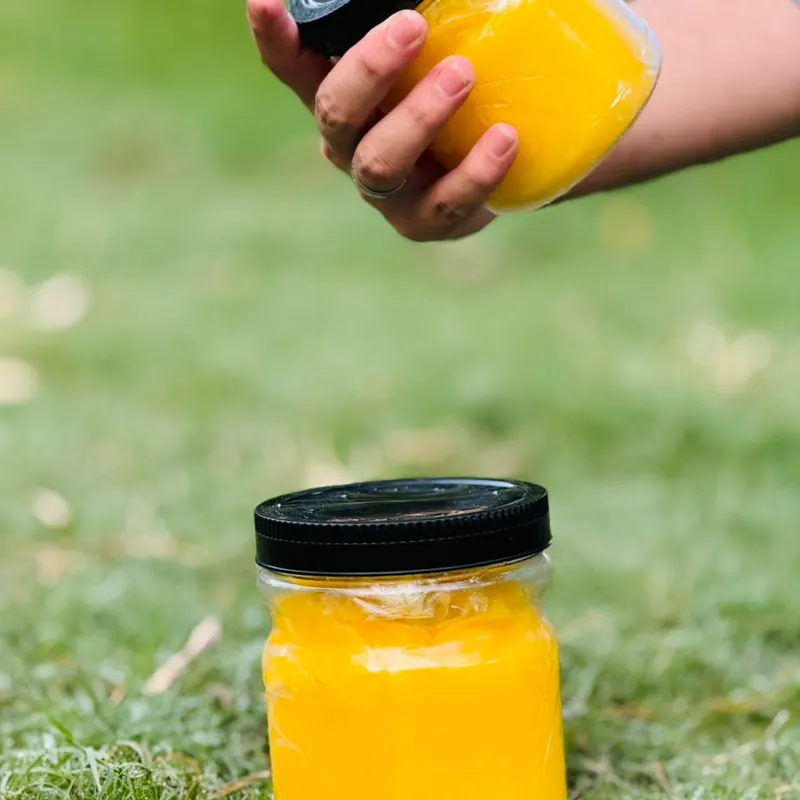
Search for village desi ghee and you will find plenty of jars with a mud house or a wooden churn printed on the label. Most people searching for it aren’t really asking where the ghee was made. They want ghee that tastes like the ghee their grandmother made: slow-cooked from butter, grainy when it sets, with a smell that fills the whole house. This post explains what village ghee actually means, how to check ghee sold under that name, and what our own ghee is, so you can decide before you order.
One thing up front. We are a small family business and we make our ghee at home in Rawalpindi, not on a farm or in a village. What we share with village ghee is the method. That is the part that matters, and it is what this post is about.
What people mean by village desi ghee
When someone says “village ghee”, they usually mean ghee made the old way, by hand, in small amounts. In most homes it went something like this:
- Milk is boiled and left to cool. A thick layer of cream forms on top and is saved, day after day, until there is enough.
- The cream is turned into butter, either by setting it into yogurt and churning it, or by churning the cream directly.
- The butter is cooked slowly in a heavy pot over a low flame until the water is gone and the milk solids at the bottom turn brown.
- The clear ghee is strained off and poured into jars.
No shortcuts, nothing added, and a lot of patience. The slow cooking is where the nutty smell and the deep colour come from. We go through each step in more detail in how desi ghee is made at home.
Is village ghee different from homemade ghee?
Not really. “Village” describes a way of making ghee more than a place. Ghee made in a city kitchen from saved cream, churned and slow-cooked, is made the old way too. And ghee with a village label that has been mixed with vegetable fat isn’t village ghee in any useful sense, whatever the jar says.
Pure village ghee: how to check what you are buying
“Pure village ghee” is a common phrase in online listings and on WhatsApp statuses. Nobody regulates the word “village”, so check the ghee itself rather than the label. A few things you can do at home:
- Smell it warm. Heat a spoonful in a small pan. Ghee made from butter gives off a rich, slightly nutty smell. A flat or waxy smell is a warning sign.
- Look at it once it sets. Slow-cooked ghee often turns grainy as it cools, with small grains through it. Ghee that stays perfectly smooth and looks the same at every temperature deserves a closer look.
- Melt it. Pure ghee melts quickly in a warm pan and turns clear. If it leaves a white, greasy film or separates oddly, ask questions.
- Taste it. A little on hot roti tells you a lot. It should taste of butter, not of nothing.
- Ask how it was made. A real maker can tell you where the cream comes from, how the butter is made and roughly how long the cooking takes. Vague answers are a signal in themselves.
Home tests are a guide, not proof. For a fuller list of checks, read our post on how to tell pure desi ghee from fake.
How we make our ghee
Ours is made in our home kitchen in Rawalpindi, in small batches. We save the cream from boiled milk, set it into yogurt, and churn it by hand to get butter. The butter then goes into a heavy pot on a low flame, and someone stays with it until the solids brown and the ghee runs clear. We strain it, let it cool and pack it. Nothing is added: no colour, no flavouring, no other fat.
So we won’t tell you our ghee comes from a village. It doesn’t. It is made by the same traditional method people have in mind when they search for village desi ghee, and you are welcome to come and watch how we work before you buy.
Village desi ghee price: our packs
We sell one product, Desi Ghee, in four sizes. These are our prices:
| Size | Price | Delivery |
|---|---|---|
| 500g | Rs 2,100 | Rs 200 (Islamabad/Rawalpindi), Rs 350 (other cities) |
| 1kg | Rs 4,000 | Rs 200 (Islamabad/Rawalpindi), Rs 350 (other cities) |
| 2kg | Rs 8,000 | Rs 200 (Islamabad/Rawalpindi), Rs 350 (other cities) |
| 3kg | Rs 12,000 | Free |
Delivery arrives within 3–5 days. Orders of 3kg or more ship free; that is our only offer, and we don’t run discounts. You can pay cash on delivery, or by JazzCash, Easypaisa or bank transfer.
We can’t speak for other sellers’ prices. What we can say is that homemade ghee takes a lot of cream and several hours at the stove for each batch, which is why it costs more than ghee from a factory line.
How to order
- Website: choose your size on the Desi Ghee product page and check out.
- WhatsApp: message us on 0300-0111718 with your size, address and how you’d like to pay.
- Visit first: if you’d rather see, smell and taste the ghee before ordering, book a time on WhatsApp. We’re in New Khatariyal, near Shell Pump Road, Rawalpindi.
We deliver across both cities and further afield. See desi ghee in Rawalpindi for local delivery details.
Frequently asked questions
Is your ghee made in a village?
No. We make it at home in Rawalpindi. The method is the traditional one: cream set into yogurt, churned by hand into butter, then slow-cooked over a low flame.
Why does village ghee go grainy?
Slow-cooked ghee often forms grains as it cools, especially in winter. It’s normal and doesn’t mean anything is wrong with it.
What is your price for 1kg?
Rs 4,000 for 1kg, plus Rs 200 delivery in Islamabad and Rawalpindi or Rs 350 to other cities. On 3kg or more, delivery is free.
Can I taste the ghee before I buy?
Yes. Book a time on WhatsApp 0300-0111718 and visit us in New Khatariyal, Rawalpindi.
How should I store it?
Keep the jar closed in a cool, dry cupboard and always use a dry spoon. Water getting into the jar is the main thing that spoils ghee.
اردو خلاصہ
گاؤں کا دیسی گھی دراصل پرانے طریقے سے بنا گھی ہے: بالائی سے مکھن، اور پھر مکھن کو دھیمی آنچ پر پکانا۔ ہمارا گھی راولپنڈی میں گھر پر اسی روایتی طریقے سے بنتا ہے اور اس میں کچھ نہیں ملایا جاتا۔ آرڈر سے پہلے آپ آ کر گھی دیکھ، سونگھ اور چکھ سکتے ہیں۔